We’ve all had those moments. It’s a Tuesday at 3:00 PM. You have three tabs open in your browser, a project deadline looming in your inbox, and a notification on your phone reminding you that you’ve forgotten to reply to a message from two days ago. For many people, this is just a busy afternoon. But if you live with ADHD, this isn't just "busy"—it feels like a cacophony. The mental static rises, the edges of your concentration fray, and suddenly, the "loudness" in your brain becomes so distracting that finishing a simple email feels like trying to run through waist-deep water.
When we talk about the intersection of stress and ADHD, we are rarely talking about a simple lack of willpower. We are talking about a fundamental difference in how the brain regulates input, prioritises tasks, and manages the physiological response to pressure. If you’ve spent your life being told to "just be more disciplined," it’s time to retire that advice. It doesn’t account for the neurobiology of your brain—and it certainly doesn’t help you get through your Tuesday afternoon.
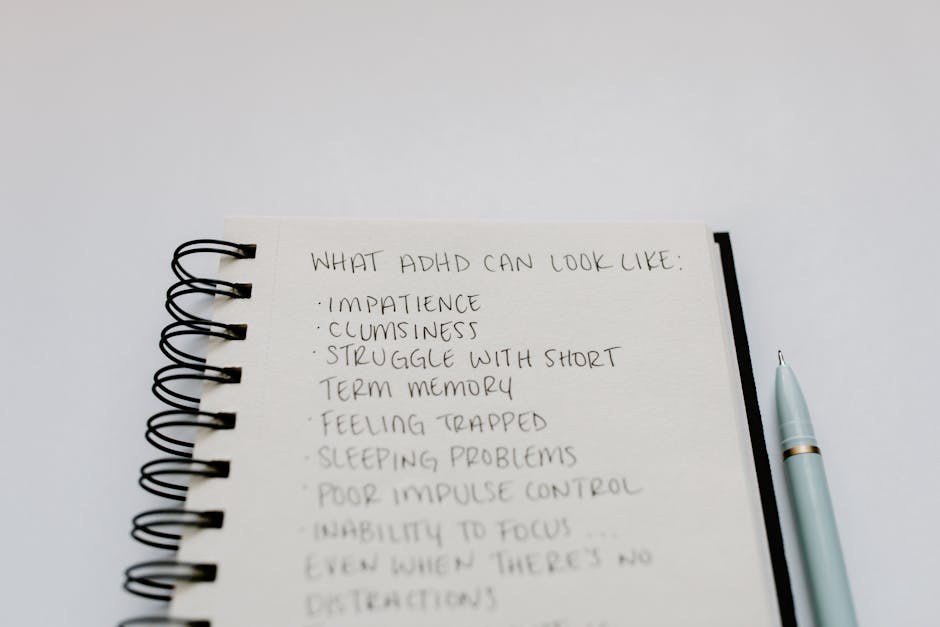
ADHD as a Cognitive Style, Not Just a Deficit
For too long, the medical narrative surrounding ADHD has focused almost exclusively on the "deficit" model. We talk about what is missing: attention, impulse control, executive function. But this clinical framing misses the reality of how these brains actually operate.
Instead of viewing your brain as "broken," consider the concept of a divergent cognitive style. ADHD brains are often highly associative. They are excellent at seeing connections between disparate ideas, thriving on novelty, and engaging in "big picture" thinking. This is the bedrock of creative work, entrepreneurial problem-solving, and rapid-fire innovation. The problem arises when this high-speed, associative engine is forced to operate within a rigid, sequential, and low-stimulation environment—like a standard 9-to-5 office structure.
When you add stress to that environment, the brain’s limited resources for "filtering" become overwhelmed. The "loudness" isn't a malfunction; it is the sound of your brain trying to process too much information at once because it lacks the inhibitory gatekeepers that neurotypical brains use to ignore background noise.
The Overstimulation Loop
Why does stress act as an accelerant for ADHD symptoms? The answer lies in the prefrontal cortex (PFC), the region of the brain responsible for executive functions like working memory, planning, and focus.
Under normal conditions, an ADHD brain is already working harder than its peers to maintain focus. When you experience stress, your body releases cortisol and adrenaline. While these hormones are designed to help us survive immediate threats, they can actually impair PFC function. For someone with ADHD, this is a double whammy: the physiological stress response temporarily "shuts down" the very part of the brain you need to manage your focus problems. You aren't just distracted; you are neurologically under-resourced.
What Does This Look Like on a Tuesday at 3:00 PM?
To move past the vague, clinical definitions, let’s look at the reality of the daily grind. At 3:00 PM on a Tuesday, your energy levels are dipping. You are likely experiencing decision fatigue. If you have ADHD, your brain is likely searching for dopamine to compensate for the "afternoon slump." This is when you find yourself suddenly deep-diving into a rabbit hole of irrelevant information, or shifting focus every six minutes. It isn't a lack of discipline; it’s an urgent, unconscious attempt by your brain to find the stimulation required to keep the engine running.
Traditional UK Treatments and Their Limits
In the UK, the gold standard for managing ADHD is guided by the National Institute for Health and Care Excellence (NICE) guidelines. These guidelines provide the framework for how the NHS approaches ADHD, typically recommending a combination of psychoeducation, environmental modifications, and pharmacological interventions (stimulants and non-stimulants).
While these tools are life-changing for many, they aren't a "fix-all." NICE-recommended medications—such as methylphenidate or lisdexamfetamine—work by increasing the availability of dopamine and noradrenaline in the brain. However, they don't erase the underlying cognitive style. Patients often find that while medication helps with "loudness," it doesn't necessarily solve the fatigue or the sensory overwhelm that comes with high-pressure environments.
Furthermore, the current waiting lists for adult ADHD assessment in the UK are significant. Many people find themselves in a precarious position: struggling to function, seeking support, but caught in a system that is currently stretched to its capacity.
Understanding the Evolving Landscape
As the addmagazine.co conversation around ADHD matures, so too do the options for management. Beyond the traditional stimulants, there is increasing interest in more nuanced, patient-led care. For example, some individuals explore the potential of medical cannabis. Unlike the "miracle-cure" rhetoric often found in unregulated forums, the clinical use of medical cannabis for ADHD is a structured, specialist-led path.

Platforms like Releaf provide resources that help patients understand the pathway for accessing specialist care for ADHD. It is crucial, however, to approach this as a regulated medical process. Medical cannabis is not a "uniform product"—it is a complex medicine that requires strict clinical oversight. It is not about simply "using cannabis," but rather about working with clinicians to find specific formulations that might, for some, assist in managing the physiological overstimulation that exacerbates ADHD symptoms.
The Execution Gap: A Summary Table
Understanding why you feel the way you do is the first step toward managing it. Below is a breakdown of how the brain reacts to common stressors versus what actually helps.
The Trigger The Internal Experience The "Old Advice" (Avoid) The Evidence-Based Approach High Workload "Loud" brain; paralysis "Just push through it" Task-splitting; external timers Deadline Pressure Executive function "shutdown" "Use more discipline" Low-demand periods; sensory regulation Afternoon Fatigue Seeking dopamine/Distraction "Stop wasting time" Scheduled movement; brain breaksMoving Toward Compassion
If your brain feels loud and scattered, know that you are not failing. You are operating a high-performance, high-input machine that wasn't designed for the standard, monotonous rhythm of the modern working week.
To move forward, stop asking yourself to be "more disciplined." Start asking what your brain needs to dial down the volume. Does it need a quiet space? Does it need a change of pace? Does it need medical support that has been properly reviewed by a specialist in line with UK guidelines?
The "scattered" feeling is a signal—it’s your brain telling you that it has reached the edge of its current capacity. Honour that signal. Instead of forcing yourself to focus harder, give yourself the permission to shift your environment. On a Tuesday at 3:00 PM, sometimes the most productive thing you can do is to stop trying to force a square peg into a round hole and, instead, change the shape of your afternoon.
Disclaimer: This article is for information purposes only and does not constitute medical advice. If you suspect you have ADHD or are struggling with your mental health, please consult your GP or a qualified healthcare professional. You can review the official NICE guidelines for ADHD assessment and treatment on the NICE website.