After eleven years of living out of a suitcase for health IT and payer-provider conferences, I have learned one immutable truth: the venue dictates the outcome. If you are standing on a carpeted expanse the size of a football field in Las Vegas, surrounded by the Go to this website hum of industrial HVAC and the desperate cries of booth staffers trying to scan your badge, you are not networking. You are participating in a transaction.
I’ve moved from hospital strategy rooms into advising digital health vendors, and the most common mistake I see is a lack of discernment between event formats. If you are treating an executive roundtable the same way you treat a panel discussion, you are burning your marketing budget and, more importantly, you are burning your reputation with decision-makers.
Let’s cut through the fluff and look at why your networking strategy needs an immediate pivot, especially when the topics of the day are healthcare workforce shortages and the reality check of AI integration.
The Trade Show vs. The Summit: A Necessary Distinction
Before we dive into the formats, let’s clear the air on nomenclature. I keep a running list of events that feel like trade shows versus those that feel like summits. If an event promoter calls their gathering "the biggest event in healthcare," I immediately subtract 50% from their projected attendance numbers. Usually, "the biggest" just means "the loudest," and loudness is the enemy of strategy.
In healthcare, we are dealing with high-stakes, capital-intensive decisions. We are not selling widgets. We are selling solutions to clinical burnout, interoperability failures, and the massive, looming shadow of workforce attrition. When you choose your venue and your participation format, you are choosing how you want to be perceived by a Chief Medical Officer or a CFO.

Panel Discussions: The "Broadcasting" Format
Panel discussions are the "trade show" staple. They usually take place in an auditorium or a semi-open space on the show floor. There is a moderator, a handful of experts, and a room full of people checking their emails.
The Reality: Panels are for brand awareness, not pipeline generation. When you participate in a panel on "The Future of AI in Care Delivery," you are broadcasting to a crowd. You are not having a conversation.
The "Badge Scan" Trap
Most vendors view the panel as a chance to capture leads. They hope someone asks a question, gets intrigued, and wanders over to the booth to be scanned. I count "random badge scans" as a massive networking failure. A scan is not a relationship. A scan is just a data point for an email drip campaign that will likely end up in the junk folder of a stressed-out executive who doesn't remember who you are.
If you are pushing a panel session, your objective should be thought leadership, not conversion. If you try to force a sales pitch into a panel discussion, the audience—and the moderator—will tune you out immediately.
Executive Roundtables: The "Deep Dive" Format
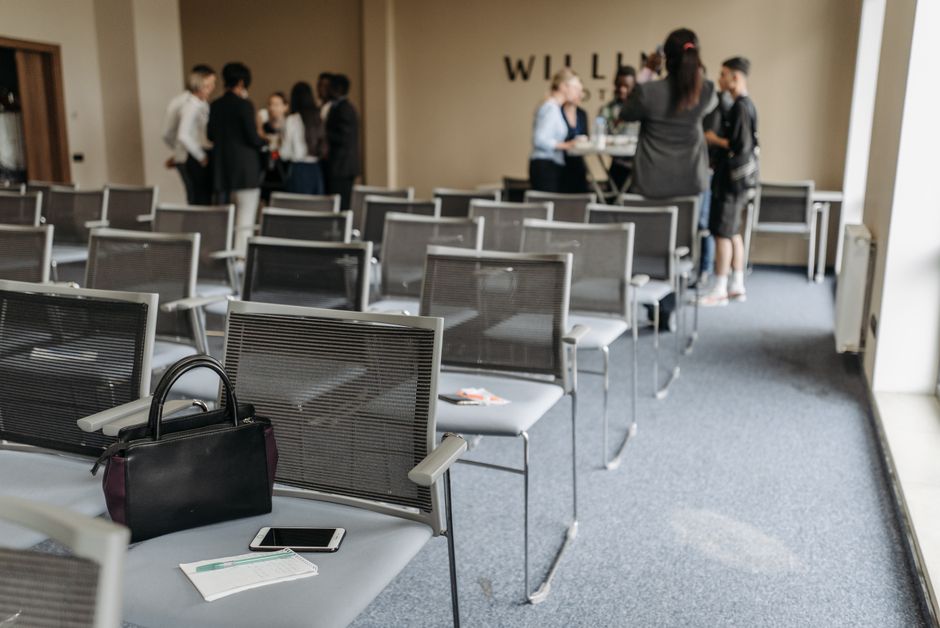
This is where the real work happens. An executive roundtable is typically an invite-only affair, held in a boardroom or a private dining space away from the chaos of the expo floor. These are intimate, usually capped at 12–15 people, and they operate under Chatham House rules.
The Reality: Roundtables are for trust-building and problem-solving. In a roundtable, you aren't selling; you are listening. When you bring together a group of hospital COOs to discuss the practical realities of workforce shortages, you gain more intelligence in 90 minutes than you would in three days of booth duty.
https://smoothdecorator.com/the-illusion-of-scale-how-to-actually-network-at-a-1300-exhibitor-expo/The AI Integration Challenge
In 2024, if I hear one more company claim their AI will "solve the workforce shortage" without citing a specific peer-reviewed reduction in administrative burden or a quantifiable increase in nurse retention, I’m walking out. Executive roundtables are the perfect venue to test these claims. You cannot hide behind fluffy marketing collateral in a room full of people who are currently fighting to keep their clinics staffed. If your data doesn't hold up to scrutiny in a roundtable, it doesn't hold up, period.
Comparison Table: Selecting Your Strategy
Feature Panel Discussion Executive Roundtable Primary Goal Brand Visibility & Thought Leadership Relationship Building & Strategy Alignment Audience Size 50 to 500+ 8 to 15 (Curated) Cost/Effort Moderate (Booking & Prep) High (Curation & Logistics) Networking ROI Low (Mostly cold contacts) High (Warm, intent-driven connections) Tone Performative ConsultativeNetworking Strategy: Quality Over Quantity
The "bigger is better" mentality is killing our industry's ability to innovate. We are so obsessed with having 5,000 people at a conference that we forget that 99% of those people have zero authority to sign a contract or influence a workflow change.
If you are a digital health vendor, your goal shouldn't be to meet 100 people. Your goal should be to engage three potential champions who actually understand the systemic pressures of the modern hospital. This is why invite-only forums exist. They filter for intent. By the time you sit down at a roundtable, everyone in that room has a vested interest in the topic at hand. That is a higher-quality interaction than any interaction you will have in a convention center hallway.
Digital Tools to Amplify Your Presence
Even if you are doing the hard work in a roundtable, you still need to capture the narrative. Use your digital tools effectively to share insights without falling into the trap of overpromising ROI. Use these tools to signal that you are a participant in the conversation, not just a seller.
If you want to share your takeaways, keep it professional and rooted in the challenges discussed:
Share the takeaway: Share on Facebook Share on X (Twitter)
Final Thoughts: Don't Just Show Up
I have spent enough time in the back of hotel conference rooms to know when an event is a waste of time. The venue sets the tone. If you are in a sterile, massive convention center, keep your expectations low for genuine connection. If you are in a curated, small-scale environment, bring your best intellectual game.
Healthcare is facing an existential crisis regarding workforce stability and the integration of AI. We don't need more "biggest ever" conferences. We need more forums where we can sit in a room, close the door, and actually talk about what works, what doesn't, and what we are going to do about it. Stop counting badge scans and start counting conversations that actually move the needle.
As an advisor, I help digital health companies navigate the maze of industry events. If you’re tired of the trade show circuit and want to build a strategy rooted in reality, reach out. Let’s stop talking about "the biggest" and start talking about the best.