I’ve spent eleven years sitting in edit suites, coffee shops, and design studios, watching the most brilliant people I know crumble under the pressure of "being inspired." The biggest lie in the creative industry isn't that you aren't talented; it’s the pervasive myth that creativity is some divine lightning bolt that strikes when you’re staring out of a rainy window. If you wait for the "spark," you’ll be waiting forever.

You’ve noticed that you only feel creative after you’ve gone through your specific, predictable sequence. You might think that makes you high-maintenance or superstitious. I’m here to tell you it makes you sensible. What you are experiencing isn't a quirk—it’s a neurological bridge.
When you ask me about your process, the first thing I’m going to ask you is: What does this look like on a Tuesday at 3 pm? Because at 9 am on a Monday, when you’re fresh and caffeinated, anyone can be creative. But can you find that same flow state when the mid-afternoon slump hits, the emails are piling up, and your brain is screaming https://www.the-art-world.com/blog/health-beauty/creative-work-often-depends-as-much-on-ritual-as-inspiration/ for a distraction? That is where your ritual becomes your survival strategy.
The Neuroscience of the "Bridge"
Your brain is a massive energy consumer. It is wired to seek the path of least resistance. When you sit down to start a project, your brain immediately flags it as "High Energy Expenditure" and tries to pivot to something easier—like checking your phone or reorganizing your desktop icons.
A starting work routine acts as a bridge. It tells your prefrontal cortex, "We aren't doing 'life' right now. We aren't doing 'consumer' right now. We are doing 'maker'." By performing the same small sequence—the same playlist, the same specific mug, the same window-clearing exercise—you are signaling safety to your nervous system. You are essentially telling your brain that it is safe to drop the hyper-vigilance and enter the deep work zone.
The War Against the Noise: Algorithms and Notifications
We need to talk about the primary enemy of your creative ritual: the modern attention economy. Social media algorithms are not designed for your wellbeing or your creative output; they are designed to keep you in a state of continuous, low-level agitation. Every notification that pings your phone is a cortisol spike. If you think you can "just quickly check" your notifications before you start your ritual, you are effectively setting your house on fire before you try to bake a cake.
I have a rule: if an app serves me constant, mindless notifications that pull me out of my focus, I delete it. Mid-sentence. If I’m writing a feature piece and a ping breaks my flow, that app is gone from my phone before I’ve finished the paragraph. You need to guard your liminal space—that quiet "in-between" time where thoughts actually have room to grow—from the constant encroachment of algorithmic noise.
The Cost of Context Switching
Every time you look at a notification, you pay a "switching tax." It takes an average of 23 minutes to regain deep focus after an interruption. If you’re checking your phone every 10 minutes, you are literally incapable of entering a creative flow. Your rituals are the only thing protecting you from this constant fragmentation.
Wellness as a Creative Foundation
I am tired of productivity gurus who act like sleep is optional. If you are ignoring your sleep, you are not being "productive," you are just operating on a deficit. Wellness is not a spa day or a scented candle; it is the structural integrity of your creative career.
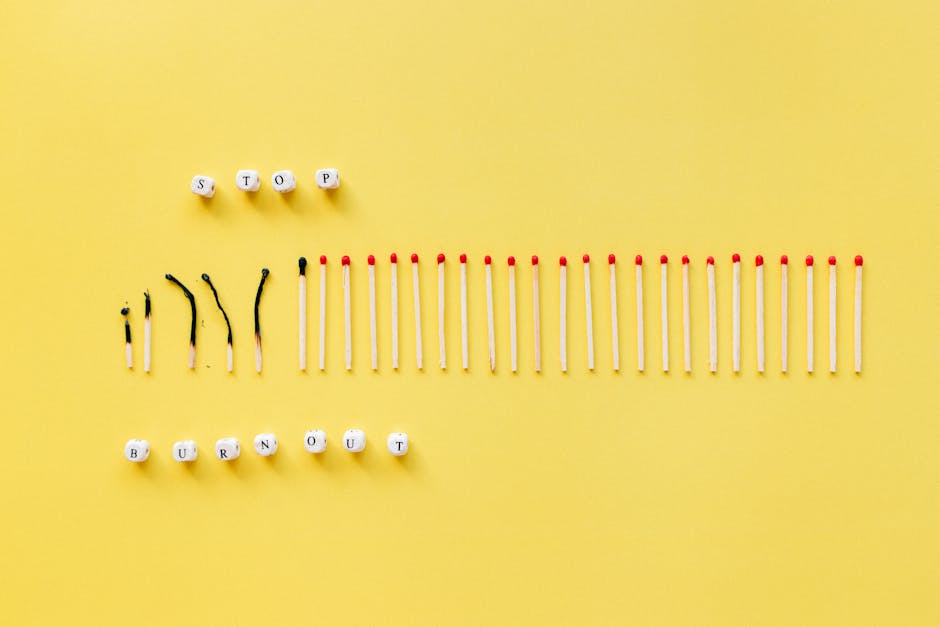
Burnout isn't caused by working too hard; it’s caused by working without recovery. If your creative ritual doesn't include a mechanism for detaching at the end of the day, your brain never actually powers down. You end up in a state of perpetual semi-work, where you’re physically present but mentally exhausted. That is how you get to the point where even starting your routine feels like climbing a mountain.
Building Your Tiny Ritual Toolkit
People often get stuck because they think a ritual needs to be an elaborate ceremony. It doesn't. In fact, if it takes more than two minutes, it becomes a hurdle rather than a bridge. Here are a few rituals that take under 120 seconds to execute, designed to signal to your brain that it's time to create.
Ritual Type The Action The Objective Environmental Light one specific candle or turn on a dedicated task lamp. Create a visual boundary between work and life. Auditory Put on the same 3-song playlist (instrumental only). Override environmental noise with a familiar sound cue. Physical Clear your desk of everything except your current tool. Reduce visual clutter to lower cortisol levels. Sensory Wash your hands with cold water or a specific soap. Reset the tactile nervous system and signal "fresh start."How to Start: A Practical Guide
If you feel like your current routine is broken or non-existent, don't try to overhaul it overnight. Creativity isn't magic; it’s a process of iteration. Start small.
Identify your trigger: What is one physical action you *already* do right before you work? Keep that as your anchor. Audit your environment: For three days, write down every time a notification breaks your focus. Then, delete the loudest offenders. No excuses. Test the "Tuesday 3 pm" theory: Next time your energy dips at 3 pm on a Tuesday, perform your 2-minute ritual. Don't worry about the quality of the work. Just worry about completing the ritual. Prioritize the recovery: Treat your bedtime like an important meeting. If you’re tired, your creative output will be reactionary rather than visionary.Final Thoughts: Stop Searching for "Inspiration"
Stop waiting for the muse. The muse is a fickle guest who rarely shows up. Instead, build a house that is so quiet, so focused, and so welcoming that when you *do* decide to work, the work has nowhere else to go but into reality.
Your habit is not a crutch. Your habit is the architecture of your output. When the world is loud, when the algorithms are demanding your rage and your attention, and when the burnout is creeping in at the edges, your ritual is the only thing that belongs entirely to you. Guard it. Refine it. And above all, keep it simple enough that even on your worst day, you can still finish the sequence and show up for yourself.
After all, the work isn't going to do itself. And you’re the only one who can build the bridge to get there.