If you have spent more than a decade in the health IT ecosystem, you know the feeling. You arrive at the convention center, the air is cold, the coffee is overpriced, and your feet are already aching in anticipation of the 20,000 steps you’re about to log. Most attendees treat HIMSS as a singular, monolithic event—a sprawling trade show floor that demands you collect as many business cards as humanly possible.
I’ve spent 11 years managing hospital partnerships and another few advising vendors on where to plant their flags. If I’ve learned Executive Summit HIMSS anything, it’s this: if you’re spending your time at HIMSS merely scanning badges at a booth, you are losing money. The most high-value conversations—the ones that actually move the needle on hospital strategy—happen before the expo floor even opens. They happen in the pre-conference forums.
What are HIMSS Pre-Conference Forums?
HIMSS pre-conference forums are deep-dive, topic-specific sessions that take place a day or two before the main exhibition hall becomes a sensory nightmare of flashing lights and loud demos. These are not "intro to the cloud" sessions. These are focused, often peer-led intensives designed for people who are already knee-deep in the operational trenches.
When you look to curate your HIMSS schedule, these forums are your primary opportunity to escape the marketing fluff. They are where the "how" is discussed rather than the "what." In the current climate, where health systems are struggling with severe workforce shortages and the messy integration of generative AI, these forums are no longer optional—they are the only way to get a pulse on the reality of the industry.
Theme 1: The Workforce-AI Nexus
Every vendor at HIMSS26 is going to claim their platform "solves" the healthcare workforce crisis. Most of them are selling pipe dreams. The pre-conference forums, however, tend to attract the clinicians and hospital executives who are actually dealing with the turnover.
When selecting your track, look for sessions that focus on AI-assisted clinical documentation rather than "AI innovation" in the abstract. Workforce shortages are a systems-pressure problem, not a technology-deficit problem. A good pre-conference forum will address the friction between digital health tools and clinician workflow. If a session description is full of buzzwords about "seamless integration" without mentioning the actual cost of implementation or the change management required, skip it. Look for the sessions that use numbers: "How we reduced nurse documentation time by 18 minutes per shift." That is the only kind of data that matters.
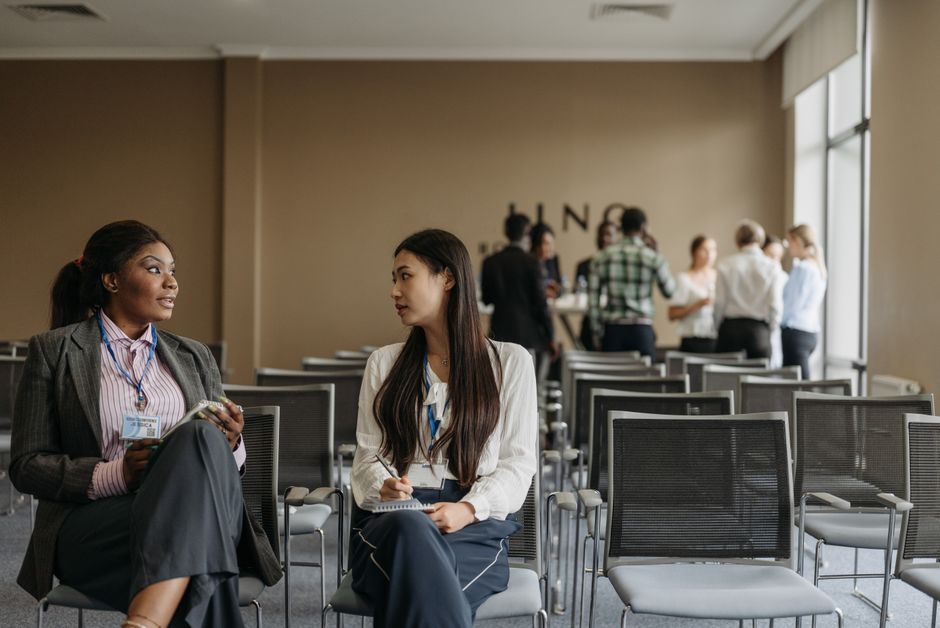
Networking Strategy: The Death of the "Random Badge Scan"
Early in my career, I was obsessed with how many connections I could make. I treated the HIMSS floor like a lead-generation machine. I would return home with a pocket full of badges, scan them all into a CRM, and wait for the "synergy." It was a failure. Every single time.
Networking is not about the number of people who know your name; it’s about the depth of the challenge you are solving with someone else. Pre-conference forums are inherently smaller, which changes the networking dynamic:
- Quality over Quantity: In a room of 50-100 people, you can find the three individuals who are actually experiencing the same operational pain as your organization. The Venue Factor: Pay attention to the room type. A session in a glass-walled mezzanine meeting room allows for a "breakout" energy that a massive auditorium just doesn't provide. If you’re at a venue where the forum is held in a basement breakout room, take it—the acoustics are better for actual human conversation. The "Post-Session" Rule: The real networking happens in the 15 minutes after the session ends. If you leave the room immediately to run to your next meeting, you’ve wasted the session. Stay, talk to the speaker, and find the person who asked the smartest question during the Q&A.
Invite-Only Executive Forums vs. Large Expos
There is a fundamental difference between an open-access forum and an invite-only executive retreat. As you curate your HIMSS schedule, it’s vital to understand the "weight" of these different environments. Here is a breakdown of how to think about them:
Feature Large Expo Floors Invite-Only Executive Forums Open Pre-Conference Forums Primary Goal Brand awareness, broad lead capture Strategic partnership, high-level advocacy Problem-solving, tactical learning Networking Style High quantity, low depth Highly curated, closed-door trust Topic-driven, collaborative Risk "Random badge scan" failure Echo chamber effect Overcrowding by non-decision makersDon't fall for the trap of thinking "invite-only" is always better. Sometimes, the best, most radical ideas come from the open forums where a mid-level implementation manager from a rural health system is sitting next to a chief medical officer from a major academic center. That interaction is where true health IT innovation happens.
How to Curate Your HIMSS Schedule
To make the most of your time, stop looking at the HIMSS event app like a catalog. Treat it like a project management plan. Your goal is to map your professional needs to the available health IT tracks.
Define Your "Pain Point": Choose one specific challenge your organization faces (e.g., "AI-driven scheduling to alleviate nurse burnout"). Filter all your forum choices through that lens. If it doesn’t directly address your pain point, cut it. Account for Venue Logistics: The size of the host venue matters. If you have to trek 20 minutes across a massive convention center to get from a forum to a meeting, build that buffer in. Walking through a crowd is not networking; it’s a waste of glucose. Identify the "Summit" vs. "Trade Show": Always look at the list of speakers. If the speakers are all vendor employees, it’s a trade show sales pitch. If the speakers include hospital IT directors, CMIOs, or patients, it’s a summit. Prioritize the summits. Limit Your Exposure: I recommend picking two pre-conference forums maximum. Anything more and you become a tourist rather than a participant. You need time to digest the information and follow up on the new connections you’ve made.Final Thoughts: Don't Be a Tourist
HIMSS26, like every iteration before it, will be labeled "the biggest" by someone in marketing. Ignore that. Size is irrelevant. Relevance is everything. If you spend your time at HIMSS pre-conference forums, you are insulating yourself from the noise of the expo floor and positioning yourself as a thoughtful, strategic player in the industry.
Don't be the person who comes home with a lanyard full of swag and a contact list of people you don't remember meeting. Be the person who comes home with a roadmap for solving a real-world problem, a few deep connections, and a clear understanding of where the industry is actually heading.
Did you find this guide useful? Share it with your team, and let’s start holding these events accountable for the value they provide, not just the square footage they occupy.
Share on Facebook | Share on X (Twitter)
